


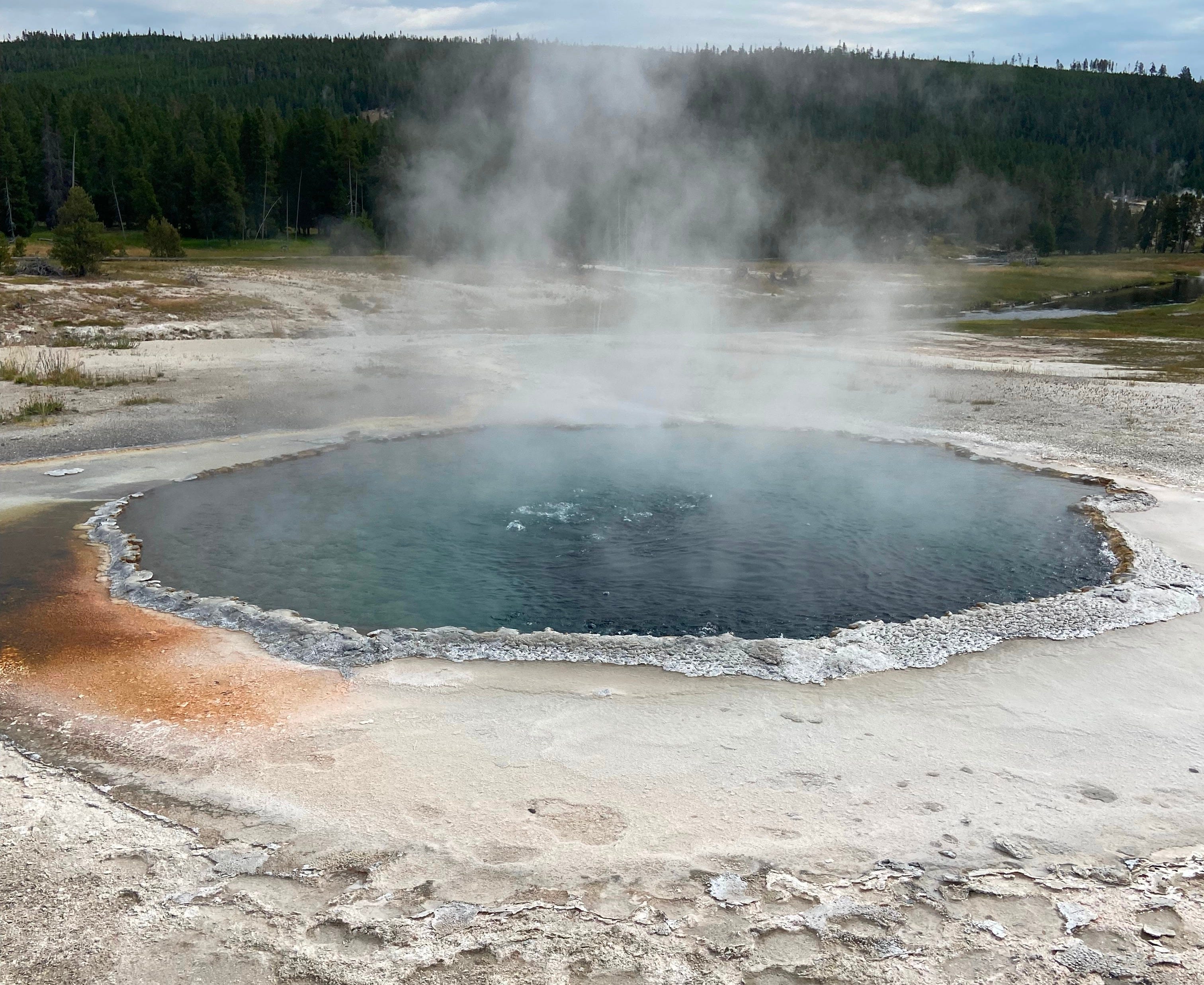
I do not like asking for help. Even when I was at my boiling point I just let the steam push me forward. I am not sure if this is a learned behavior or a survival skill. It could be gender related, or ancestral. Being fiercely independent has been important to me as far back as I can remember. I equate independence with not needing assistance of any kind.
Decades ago, at the start of my consulting career, I was part of an interview team for a big Federal project. A coach was hired to help us prepare. She was of the “never let them see you sweat” school, which was appropriate for that situation. I took it to heart and adopted that mentality for most of my career. Whatever was going on at home, or inside my head and heart, had no business peaking out during work hours. So what happened when work hours bled into life and the invisible line between personal and professional life began to disappear entirely? My “never let them see you sweat” persona came home with me and created an internal pressure cooker that erupted in the only environment that felt safe, with my family.
As fortune would have it, when the molten lava inside of me really needed to be released, I met Kip Hollister, an amazing professional coach who opened my eyes to how supportive and therapeutic guidance can be. The lock on my willingness to ask for help loosened. One of my favorite phrases of hers was looking to discover what “lights me up.” She helped me unearth those aspects of myself that are my essence. It turns out that hiding those away is was taking the joy out of living. I discovered that being my true authentic self, and synthesizing all of the pieces of me, is the secret to fulfillment.
That does not mean it is comfortable. Showing vulnerability can bring up shame and fear of judgement. And, it is not helpful to simply let your emotions spew forth unfiltered. Nobody in your staff meeting wants to hear about your fight with your spouse. But showing your humanness in thoughtful, situation appropriate communications can strengthen your relationships. It requires practice. Especially if you have lived in an environment where you have hidden behind a shield of armor, as I did. Yet, that first ask for help changed my life for the better in so many ways.
When our daughter was diagnosed with cancer this became critical to my survival, but it was still hard. All of our well meaning friends and family asked how they could help. There was no answer. As we navigated her illness and treatments, especially during COVID, the outpouring of help was amazing. People brought us food, clothes and toilet paper (more valuable than gold at the time). They lent us cars and houses. They said prayers and came to be by our side when there were no words.
What is most helpful at any point in time is relative to the situation. Surprisingly, it is often the least active offering that provides the greatest relief. Simple gestures without words can be invaluable. Receiving a kind gesture without having to verbalize what I need, because I am not adept at doing so, is incredible. It turns out, at least for me, what I often need most is just to know there is a hand that I can grab onto. Seeing the hand there makes it much easier to call for it when I lose my balance. Or when I am lying face down in the dirt.
As I have navigated my grief I have discovered that I feel most alive when helping others. There is a rich history of research that has shown that when people volunteer, donate and give small acts of kindness it reduces depression, anxiety and loneliness. Programs like the MISS Foundation’s Kindness Project started by Dr. Joanne Cacciatore are great examples of small acts with outsized impact. Helping others is good for us.
So, if you are at all like me and feel uncomfortable asking for and receiving help, consider how beneficial it is for others, and for humanity at large, to be part of this type of sharing of support. Recognize that it does not make you weak to receive, it makes you human. Giving does not make you better than others, it allows you to free your soul. Interpersonal connections are where the meaning of life are found. Whether it is in the form of a donation, a kind word, a day of volunteering your time, or just sitting and holding someone’s hand - being engaged in this give and take of life is what brings color to our experiences.
Research by Dacher Keltner has shown that moral beauty, “virtue, character, and ability, marked by a purity and goodness of intention and action” is the most common way to inspire awe. Experiencing awe makes us feel alive, it improves our physical and mental health, and reinforces our connection to something bigger than ourselves, giving life meaning.
Our acts of kindness and generosity of spirit do not need to be grandiose. They just need to come from the heart. Looking someone in the eye and smiling. Acknowledging someone who feels unseen. These simple acts might be all the help that is needed in a moment. Don’t let the bar for help, whether it is giving or receiving, be set so high that it stops you from action. Chances are that whatever you give you will receive back tenfold, and what your receive is a giving back of its own
.