


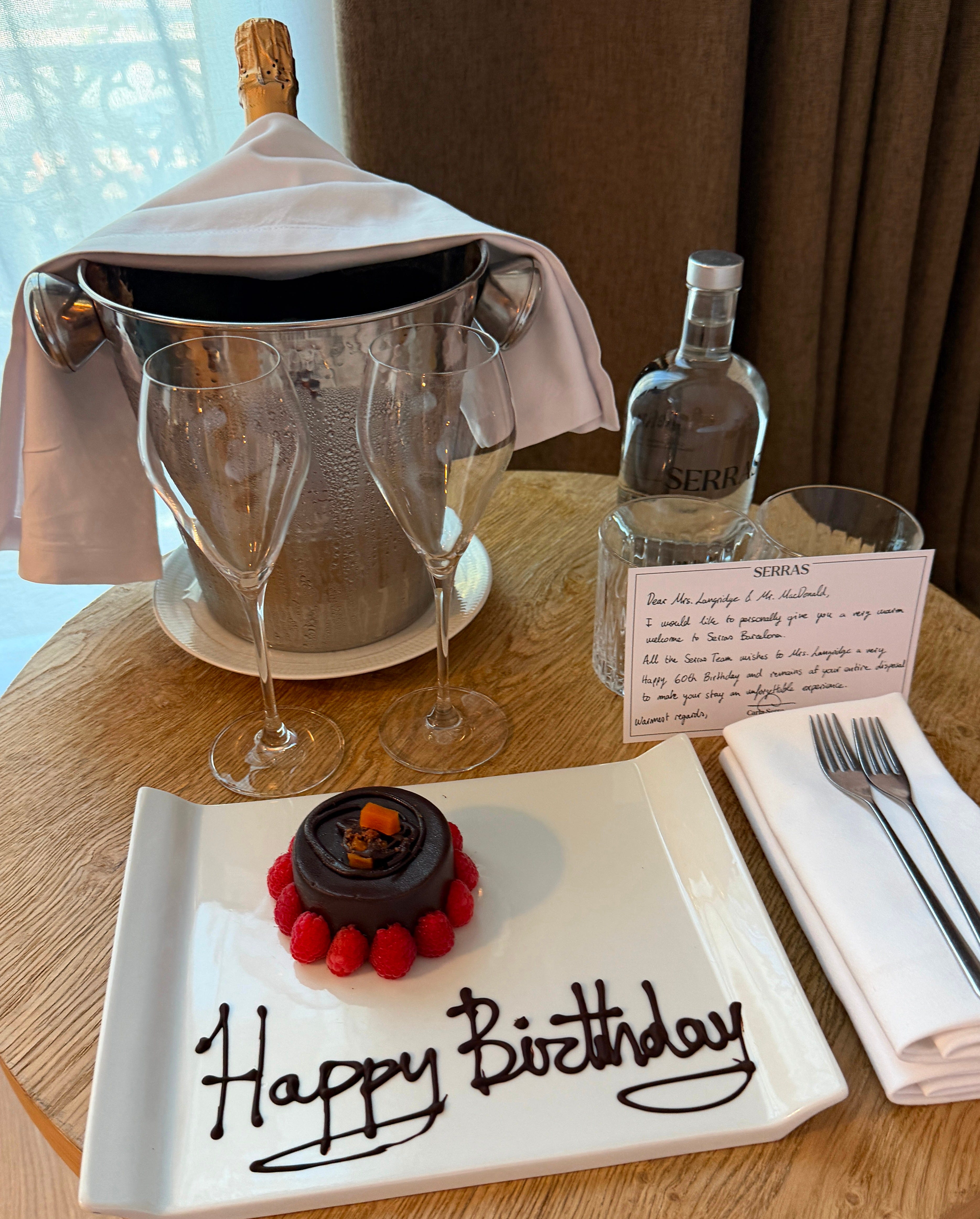
I have become a bit reflective as I approach my birthday. Remembering past years feels like considering the biographies of many people that I used to know. They shared the same name and birthday, but each had different perspectives, insecurities, priorities and goals. They also shared the belief that making smart choices and working hard would lead to desired outcomes.
All these versions of me thought that if I followed social norms, people would like me. If I studied hard and chose work over play, I would get good grades, which would lead to a successful career. I took some calculated risks, including leaving a job I did not like to return to school, which led to a new, more rewarding career. The illusion was that it was all due to my choices and effort. I seldom stopped to consider how circumstances beyond my control might have contributed to my achievements.
For most of my life, I followed what I understood to be the rules of the road, and they worked for me. As a parent, I tried to impose those rules on my children so they could have the same success. But so much about my assumptions about the road and the rules was incorrect.
Today I understand that there is no objective definition of success. I define it differently now than I did a decade ago. Success was defined for me by family, teachers, and friends, and it included things like GPA, academic degrees, annual salary, and bank account balances. Nobody encouraged me to define success for myself in any other way until I was well into middle age. I rarely considered how I wanted to feel or how I valued my time. There is a parable about a fisherman and a businessman that better captures my sentiments about success these days. I can’t help but wonder how differently I might have lived if I had heard it forty years ago.
My children quite naturally resisted my attempts to impose my definitions of success and the activities associated with them. I do not remember exactly when I began to listen, but one conversation with our son when he was in middle school stands out. There was a situation with a family member that I was trying very hard to control, yet things were not going the way I wanted. The harder I tried, the more out of control I felt. I was struggling to accept that circumstances beyond my control might prevent my efforts from producing the result I wanted. As we were discussing this, he looked at me and said, “Mom, you just need to trust the process.”
The wisdom of his words made me pause, and that conversation has stayed with me. My brain knew that there are limits to my influence on my world. I spent many years studying management, decision science, and probability. Yet my heart wanted to believe that if I did things “just right,” I could get what I thought I wanted. The bare truth is that even with the best of intentions and the most meticulous analysis, we cannot control outcomes.
The irony of this realization and my role as a faculty member teaching a course on decision-making is not lost on me. One of the topics we cover is decision-making under uncertainty. These days, the phrase itself feels redundant. When is there not uncertainty?
In the course we discuss economic theory, and approaches to reduce uncertainty. Root cause analysis, decision trees and Bayesian statistics can help frame situations and provide useful insights for decision makers. The approach may be logical and prudent, but it assumes that the future can be predicted based on the past, and that you have all the data and insight you need to model the probabilities accurately. There is no guarantee of a specific result. Uncertainty cannot be avoided.
It is natural to want to believe that with enough information, careful thought, and effort, we will have clarity and can determine our future. Behavioral economics and psychology offer great insight into why this is. Yet collectively, our actions show that we are in denial about our level of influence and control. Election season is one example. No matter how much money is spent to sway outcomes, the ultimate result depends on the independent choices of millions of people, not just those who vote, but those who opt out. The number of elections that have come down to a handful of votes demonstrates how tenuous outcomes can be.
Decision making fundamentally involves making a bet. You define your alternatives, consider the probability of circumstances that may influence them, and take your selected action. Sometimes things work out as you intended, and sometimes they do not. Yet we continue. We make the choice and take the steps. Not doing anything is an option in and of itself.
Over my life, I have made millions of decisions, some more consequential than others. I chose schools, fields of study, careers, a partner, and homes. Each choice influenced my trajectory and the choices that came next. The combinations of choices and outcomes are mind-boggling. Looking back, I can recognize my own efforts while also acknowledging how much was beyond my control. And every year, I choose to vote, even when I feel my choice may be insignificant in the bigger scheme of things.
I act because I believe showing up matters. I can decide and act even when I know I cannot guarantee a particular result. It demonstrates that I believe my feelings matter, even if I don’t love all the options in front of me. Abdicating feels like giving up on living the life I want to live.
Experience has taught me to be more accepting of uncertainty, and I have mostly loosened my grip on trying to manipulate outcomes. As a result, my life now feels less stressful and more enjoyable. I cannot control others or the world around me, but I can use my voice and pick up my proverbial fishing pole.
Happy Birthday, Marianne! Thank you for sharing this deeply insightful piece.